

Environmental Social and Governance (ESG) in business is increasing attention as sustainability be the part of every businesses. Companies that wish to remain competitive and sustainable must consider these three key aspects in their operations.
As public awareness of environmental and social issues grows, so do the expectations from consumers, investors, and even governments for businesses to be more transparent and adopt ESG practices in their operations.
So, what exactly is ESG, and why is it important for businesses? Let’s dive deeper into the concept, its criteria, and its impact on the business world.
What is Environmental, Social, and Governance (ESG)?

Environmental Social and Governance (ESG) is a framework used to assess the sustainability and impact a company’s operations in terms of environmental, social, and governance factors.
This framework often used by investors to evaluate whether a company is considering non-financial risks that could affect its financial performance in the future.
Additionally, Environmental, Social, and Governance (ESG) in business serves as a guide for companies to evaluate their impact on the environment, social welfare, and how they are governed.
The 3 Main Elements of Environmental, Social, and Governance (ESG)

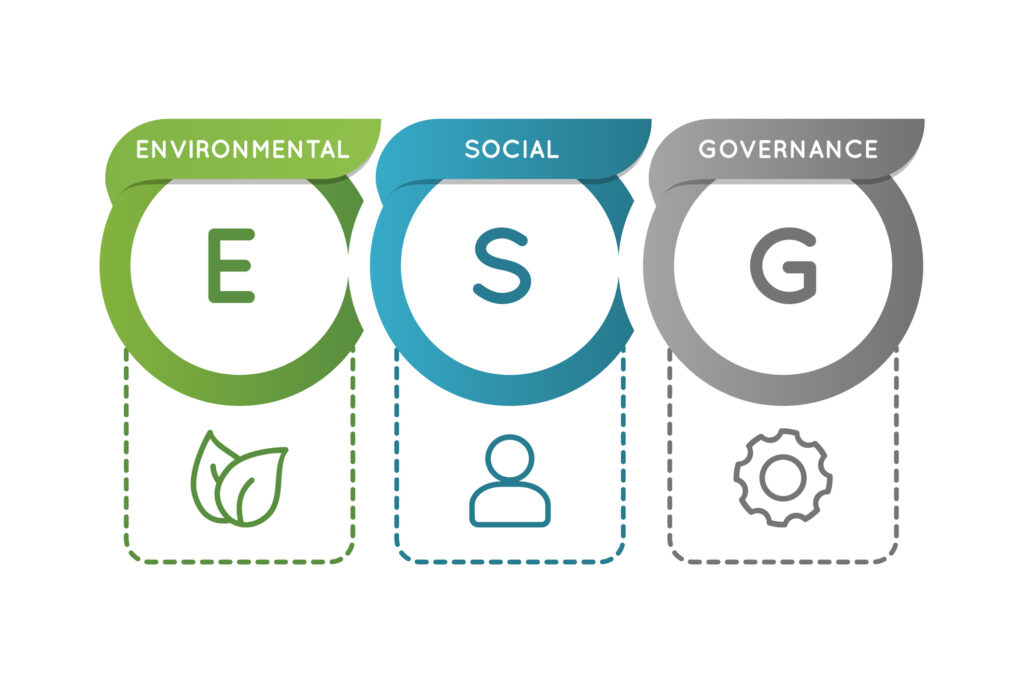
Environmental Social and Governance (ESG) in business comprises three interconnected elements that form the foundation of responsible business practices. Here are the three main components of the Environmental Social and Governance (ESG) concept:
1. Environmental
This focuses on how a company manages the environmental impact of its operations. It includes reducing greenhouse gas emissions, managing waste, using renewable energy, and being resource-efficient.
2. Social
This relates to how a company impacts employees, communities, and other stakeholders. The criteria here include human rights, corporate social responsibility (CSR), working conditions, gender equality, and employee health and safety.
3. Governance
Governance refers to the structure, policies, and practices that guide a company’s operations. Key governance criteria include transparency in financial reporting, ethical business conduct, anti-corruption policies, diversity on the board, and shareholder engagement.
Environmental Social and Governance (ESG) Criteria and Indicators

To evaluate a company’s Environmental Social and Governance (ESG) performance, several criteria are used within each category. Below is a breakdown of the main criteria for each ESG element:
1. Environmental
- Carbon Emission Reduction: Companies are expected to take steps and reduce greenhouse gas emissions and minimize their environmental impact.
- Waste and Resource Management: Proper handling of waste, water, and renewable energy use is critical in ESG assessments.
- Energy Efficiency: Measuring how efficiently companies use energy and reduce their carbon footprint is a key focus.
2. Social
- Employee Well-being: Health and safety in the workplace, leave policies, and work-life balance are essential indicators.
- Community Impact: Companies are evaluated based on their contributions to social initiatives like CSR programs, community engagement, and local empowerment.
- Human Rights: Protecting employee rights, avoiding discrimination, and supporting workers’ rights are critical social metrics.
3. Governance
- Transparency and Accountability: Companies are expected to be transparent in their operations, including financial reporting and corporate governance policies.
- Board Diversity: Ensuring diversity in gender, ethnicity, and backgrounds at the management level is increasingly important.
- Legal and Ethical Compliance: Companies must comply with laws and regulations while maintaining high ethical standards.
The Importance of Environmental, Social, and Governance (ESG) in Business
Why is ESG so crucial in the business world? The main reason is that environmental, social, and governance factors have a significant impact on the sustainability and long-term growth of companies. Here are a few reasons why ESG should be a priority:
1. Risk Reduction
Integrating ESG into business strategy helps companies identify and mitigate non-financial risks, such as climate change, human rights violations, and governance scandals. Companies that ignore these risks may face financial losses, reputation damage, and legal challenges.
2. Reputation Enhancement
Companies committed to ESG standards tend to have a more positive image in the eyes of consumers, investors, and other stakeholders. This can lead to increased customer loyalty, attract top talent, and improve competitiveness.
3. Attracting Investors
More and more investors are considering ESG criteria when making investment decisions. Companies with strong ESG scores are often more attractive to investors looking to invest in sustainable and responsible businesses.
4. Operational Efficiency
Implementing ESG strategies often leads to better operational efficiency. For instance, companies adopting energy-saving practices or reducing waste can save costs and improve profitability.
5. Regulatory Compliance
As environmental and governance regulations become stricter, companies that proactively meet ESG standards are better prepared to comply with such rules. This helps avoid penalties or fines that could disrupt business.
Environmental Social and Governance (ESG) in a Global Perspective

On a global scale, ESG has become a key benchmark for evaluating corporate sustainability. Many global stock exchanges now require listed companies to disclose their ESG performance.
Additionally, rating agencies like MSCI and Sustainalytics provide ESG scores to help investors assess the risks and opportunities related to corporate sustainability.
As a management consulting firm, Arghajata Consulting committed to helping companies integrate ESG into their business strategies. We believe that sustainability is not just about protecting the environment but also about creating positive social impact and managing companies with strong governance.
With a data-driven approach and customized solutions, Arghajata Consulting assists companies across sectors in designing, implementing, and monitoring effective ESG strategies. Through our services, companies can enhance efficiency, competitiveness, and long-term sustainability. Together with Arghajata, let’s create a better and more responsible business future.