

The issue of sustainability is increasingly becoming a major concern for both consumers and business players. Zero waste has become one of the concepts widely adopted today. Zero waste is a resource management strategy that focuses on the 5R principles: Refuse unnecessary items, Reduce resource usage, Reuse items, Recycle unused materials, and Rot organic waste.
For business players, this approach is not merely an eco-friendly trend, but a long-term strategy that helps improve efficiency, strengthen reputation, and at the same time respond to consumer demands that are increasingly environmentally conscious.
Understanding zero waste requires examining its core definition and practical daily business application.
The Concept of Zero Waste in Business Operations
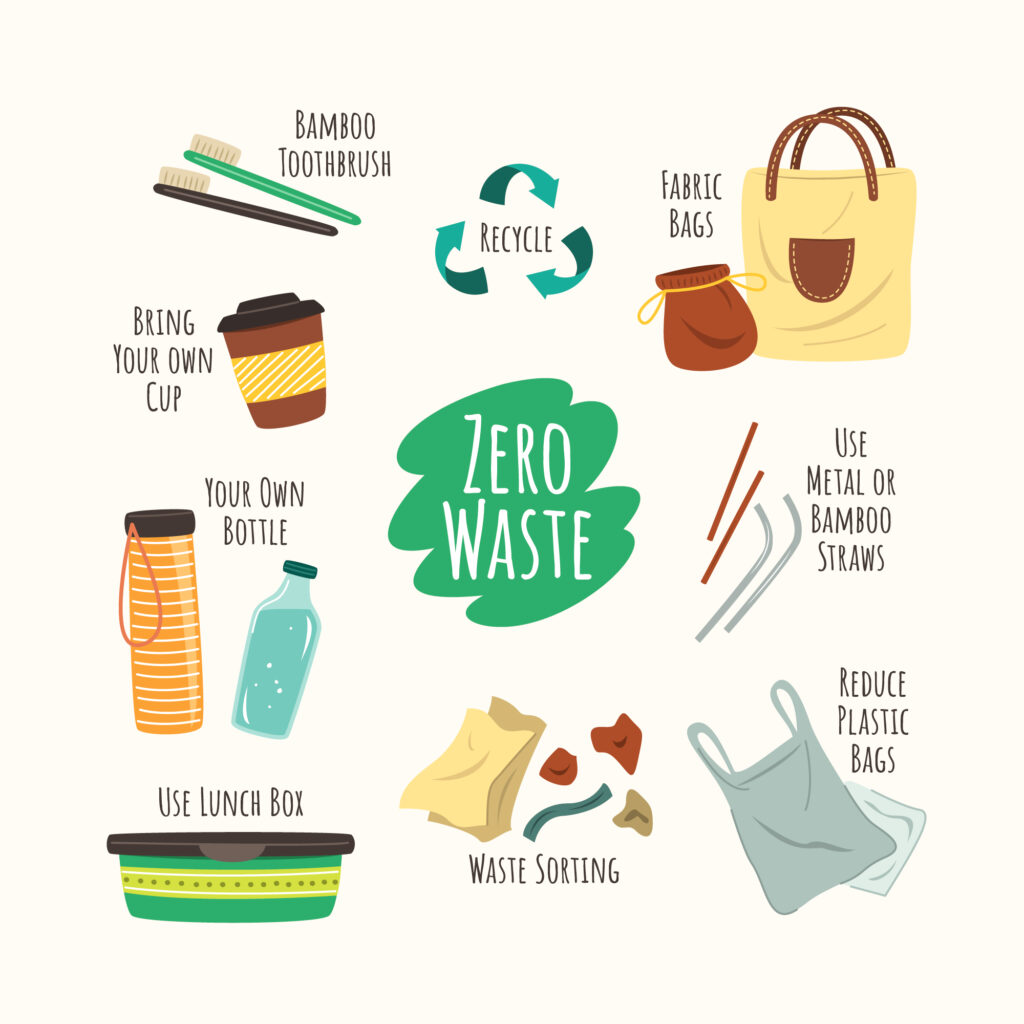
Simply put, zero waste reshapes business consumption and production habits to eliminate waste completely.
The principle is not only about throwing away less waste, but also designing business systems that can manage resources more efficiently, sustainably, and environmentally friendly at the same time.
Businesses can apply this method in various ways. For example, manufacturing companies redesigning products to make them easier to recycle, restaurants reducing single-use plastic by switching to eco-friendly packaging, or retail businesses introducing take-back programs to collect used products from consumers.
All of the above methods share one common trait: they provide safer solutions for the environment while at the same time enhancing corporate social responsibility.
Looking more closely, zero waste also encourages companies to see waste not as a burden, but as an opportunity. Companies can transform discarded production leftovers into new raw materials, while more efficient workflows cut costs and boost productivity. Thus, this concept not only has a positive impact on the environment but also delivers direct added value for businesses.
Discover More : A Brief Guide to Digital Transformation and Adaptation in Business
Steps to Implement Zero Waste
Zero waste transforms consumption and production patterns to minimize or completely eliminate generated waste. The principle is not only about throwing away less waste, but also designing business systems that can manage resources more efficiently, sustainably, and environmentally friendly at the same time.
Waste Audit
The first step is to conduct a waste audit. This stage helps companies understand where the largest sources of waste come from, whether from raw materials, production processes, or distribution. Without a clear diagnosis, waste reduction strategies will be harder to target effectively.
Redesigning Business Processes
Next, companies need to review workflows and material usage. For example, replacing packaging materials that are difficult to recycle with more environmentally friendly alternatives, or optimizing product designs to avoid excessive waste.
Strengthening a Sustainable Supply Chain
Zero waste cannot stand alone. If a company is already efficient internally but suppliers still use wasteful or non-recyclable materials, the results will not be optimal. Therefore, building an environmentally friendly sustainable supply chain is key to success.
On the other hand, consumers and even governments are starting to evaluate supply chain sustainability, not just the final product. Therefore, by encouraging suppliers to be more environmentally aware, companies indirectly help form a wider ecosystem of sustainability.
Technology and Digitalization
The last step is the use of technology and digitalization. With the help of technology, companies can now track waste and conduct data analysis more accurately to identify problem points that were previously unseen.
In addition, technology also allows for direct measurement of energy efficiency and resource usage. Installing IoT sensors on machinery tracks energy efficiency, while software analyzes the data to recommend operational improvements.
At the same time, digitalization paves the way for new innovations, such as apps that facilitate consumers in returning used packaging in exchange for new products under certain conditions, or logistics platforms that organize more efficient deliveries to reduce carbon emissions.
Thus, technology and digitalization are not just supporting tools but also the main foundation that makes zero waste strategies more measurable, effective, and sustainable.
Discover More : Business Plan to Build Investor Trust
Long-Term Benefits for Business and the Environment

Applying this zero waste strategy can provide many benefits, not only for the environment but also for the business itself. From a financial perspective, companies can cut operational costs by reducing the use of raw materials, energy, and inefficient waste management costs.
From a reputational perspective, companies that consistently implement this strategy will find it easier to gain consumer trust. Global studies show that consumers favor transparent, eco-friendly brands over companies that ignore environmental practices.
In other words, zero waste is not only about reducing waste but also about strengthening brand value and customer loyalty in the long term.
Meanwhile, the environmental benefits are clear. Companies build a circular economy by cutting waste, pollution, and carbon emissions to keep products, raw materials, and resources in use for as long as possible.
In short, the zero waste strategy offers three main advantages: cost efficiency, enhanced reputation, and a positive impact on the environment. This combination makes zero waste not just an option, but a strategic investment for companies that want to survive and thrive in the modern era.
Case Study of Zero Waste Implementation: IKEA
A real example comes from IKEA, a Swedish brand fully committed to the concept of a circular economy with the target of becoming a company based 100% on renewable and recycled materials.
Concrete steps include repurposing production waste into new products and offering a take-back program where customers return old furniture for repair or recycling. This strategy not only reduces waste but also creates added value for the business through sustainable product innovation while strengthening IKEA’s image as a global brand that cares about the environment.
As a result, reusing old materials as new resources drives operational cost efficiency. IKEA has not only succeeded in reducing waste that ends up in landfills but also gained greater consumer trust, especially from customers who are increasingly selective in choosing brands with genuine sustainability commitments.
By reducing waste, improving efficiency, and strengthening brand image, companies can build sustainable competitiveness while contributing to environmental preservation.
Is your business ready to move towards zero waste and sustainability? The Arghajata Consulting team is ready to assist you in developing measurable, practical, and impactful sustainability strategies.