
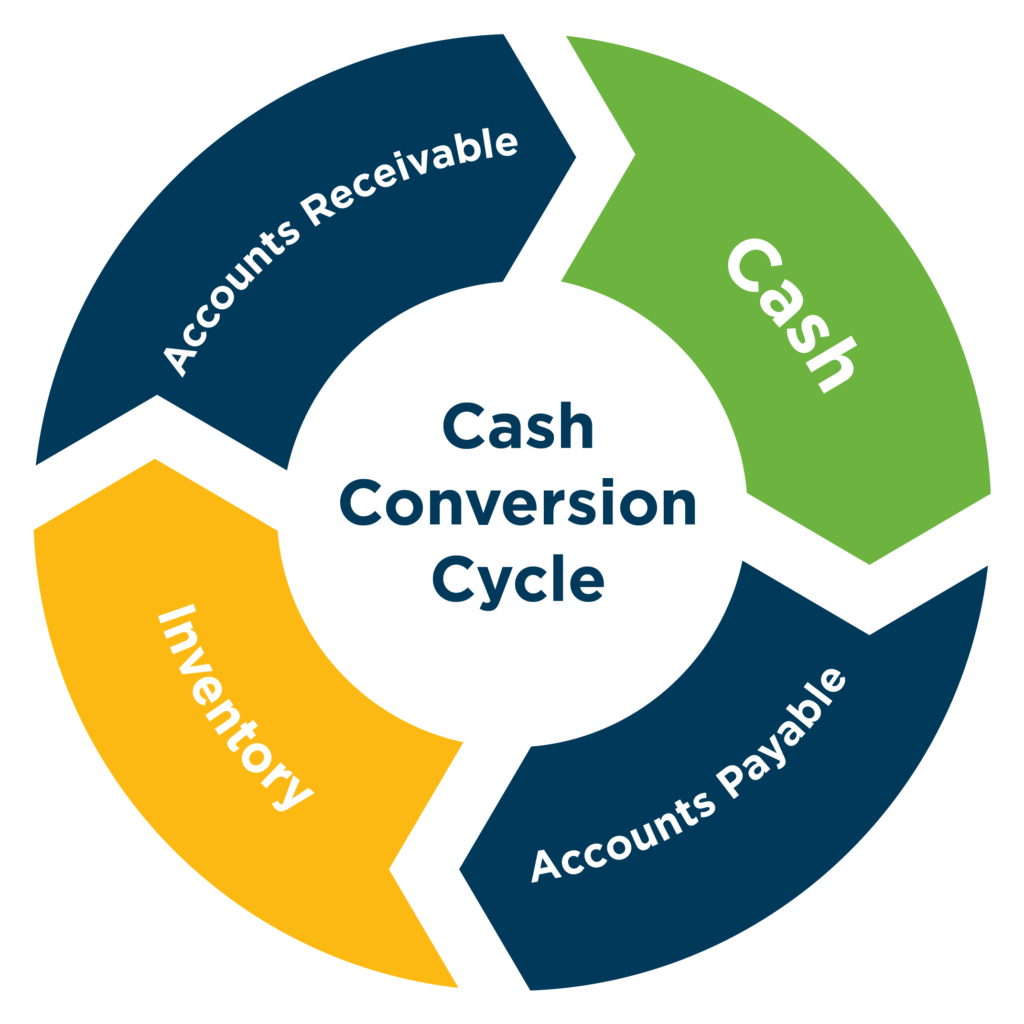
A company can report strong sales and still face cash flow problems if its working capital is not managed efficiently. One of the key indicators that can help companies understand this situation is the Cash Conversion Cycle (CCC), which measures how long it takes for funds invested in operations to be converted back into cash.
A long CCC means that cash remains tied up in inventory and receivables for a longer period before returning to the company. This condition can put pressure on liquidity, particularly when the company needs to finance daily operations while waiting for customers to make payments.
Optimizing the CCC does not necessarily mean increasing debt or securing additional financing. Companies can improve liquidity by accelerating receivables collection, managing inventory more efficiently, and optimizing payment terms with suppliers.
What Is the Cash Conversion Cycle and Why Is It Important for Corporate Liquidity?

The Cash Conversion Cycle is a financial metric used to measure how long a company needs to convert cash invested in its operations back into cash received from customers.
The CCC consists of three main components: Days Inventory Outstanding (DIO), Days Sales Outstanding (DSO), and Days Payable Outstanding (DPO). These components reflect how long inventory remains before being sold, how long customers take to pay, and how long the company takes to pay its suppliers.
A shorter CCC generally indicates that the company can recover its working capital more quickly. This allows cash to circulate more efficiently and gives the company greater flexibility to finance operational needs.
On the other hand, a prolonged CCC can indicate that too much capital is tied up in inventory or receivables. If this condition persists, companies may experience liquidity pressure even when their financial statements show revenue growth.
Discover More : Transformasi Bisnis: Mengapa Kita Selalu Salah Memulainya
Understanding the Three Main Components of the Cash Conversion Cycle

To optimize the Cash Conversion Cycle, companies need to understand the factors that shape it. The three components of the CCC reflect how a company manages inventory, receivables, and obligations to suppliers.
1. Days Inventory Outstanding (DIO)
Days Inventory Outstanding (DIO) measures the average number of days inventory remains in the company before being sold.
A high DIO may indicate excess inventory, slow-moving products, inaccurate demand forecasting, or inefficient inventory management. The longer inventory remains unsold, the longer the company’s cash remains tied up in working capital.
Companies can reduce DIO by improving demand forecasting, optimizing inventory levels, identifying slow-moving products, and aligning procurement with actual market demand.
2. Days Sales Outstanding (DSO)
Days Sales Outstanding (DSO) measures the average number of days a company needs to collect payments from customers after a sale has been made.
A high DSO indicates that cash is not being collected quickly enough from receivables. This may result from loose credit policies, inefficient invoicing processes, delayed collection activities, or customers taking longer to make payments.
Improving the collection process, setting appropriate credit limits, and establishing clear payment terms can help companies reduce DSO and accelerate cash inflows.
3. Days Payable Outstanding (DPO)
Days Payable Outstanding (DPO) measures the average number of days a company takes to pay its suppliers.
Unlike DIO and DSO, a higher DPO can help companies maintain liquidity by allowing them to retain cash for a longer period. However, extending payment periods excessively may damage supplier relationships or reduce the company’s ability to negotiate favorable terms in the future.
Therefore, companies need to balance payment timing with supplier relationships and operational requirements.
What Causes the Cash Conversion Cycle to Become Too Long?

A prolonged CCC can result from inefficiencies across several stages of the working capital cycle.
Excessive inventory is one common cause. When companies purchase or produce more inventory than necessary, capital becomes tied up in products that may take a long time to sell.
Another factor is slow receivables collection. Customers may receive extended payment terms, invoices may be issued late, or collection processes may not be properly monitored. These conditions delay cash inflows even though the company has already recognized the revenue.
Supplier payment practices can also affect the CCC. Paying suppliers too quickly can reduce the company’s available cash, while excessively delaying payments can create operational and relationship risks.
These issues show that CCC optimization requires more than simply monitoring financial ratios. Companies need to examine the operational processes behind inventory, sales, receivables, procurement, and supplier payments.
Discover More : Bagaimana Pendekatan Enterprise Management Consulting untuk Perusahaan Skala Besar?
How to Optimize the Cash Conversion Cycle Without Adding Debt

Accelerating the Cash Conversion Cycle does not always mean that a company needs to make major changes. In many cases, improvements to day-to-day operational processes can have a significant impact on cash flow. Some steps that companies can take include:
1. Accelerate the Receivables Collection Process
Companies can improve liquidity by shortening the time required to collect customer payments.
This can be achieved by improving invoice accuracy, issuing invoices promptly, establishing clear payment terms, and implementing a systematic collection process. Companies can also segment customers based on payment behavior and apply appropriate credit policies.
Reducing DSO allows companies to convert sales into cash more quickly without relying on additional external financing.
2. Improve Inventory Management Efficiency
Inventory optimization is another important lever for reducing CCC.
Companies need to maintain sufficient inventory to support customer demand without creating excessive stock levels. This requires more accurate demand forecasting, better inventory monitoring, and identification of slow-moving or obsolete products.
By improving inventory turnover, companies can reduce the amount of working capital tied up in stock and accelerate the conversion of inventory into cash.
3. Renegotiate Payment Terms with Suppliers
Companies can also improve liquidity by reviewing their payment terms with suppliers.
Negotiating longer and more appropriate payment periods can help synchronize cash outflows with cash inflows. However, negotiations should consider the company’s relationship with suppliers and avoid creating unnecessary supply chain risks.
The objective is not simply to delay payments, but to establish payment terms that support a healthier working capital cycle.
The Importance of Regularly Monitoring the Cash Conversion Cycle

CCC optimization should not be treated as a one-time financial improvement initiative. Changes in customer behavior, inventory levels, supplier terms, and sales patterns can cause the CCC to fluctuate over time.
Companies should therefore monitor DIO, DSO, and DPO regularly to identify changes in working capital efficiency.
Monitoring these indicators can also help management identify where cash is becoming trapped within the operating cycle. For example, an increase in DSO may indicate a deterioration in customer payment behavior, while an increase in DIO may signal excess inventory or declining demand.
By integrating CCC monitoring into regular financial and operational reviews, companies can identify problems earlier and take corrective action before they create significant liquidity pressure.
Conclusion
The Cash Conversion Cycle provides companies with a practical framework for understanding how efficiently working capital is converted back into cash. A prolonged CCC can restrict liquidity by keeping funds tied up in inventory and receivables, while an optimized CCC allows cash to circulate more efficiently.
Improving CCC does not necessarily require additional debt. Companies can strengthen liquidity by accelerating receivables collection, improving inventory management, and optimizing supplier payment terms.
The key is to manage the three components of CCC as an integrated working capital system rather than treating them as separate financial indicators. With consistent monitoring and process improvements, companies can improve cash flow efficiency while maintaining operational stability.
Through a structured approach, companies can identify working capital inefficiencies and develop strategies to improve liquidity without relying excessively on additional financing.