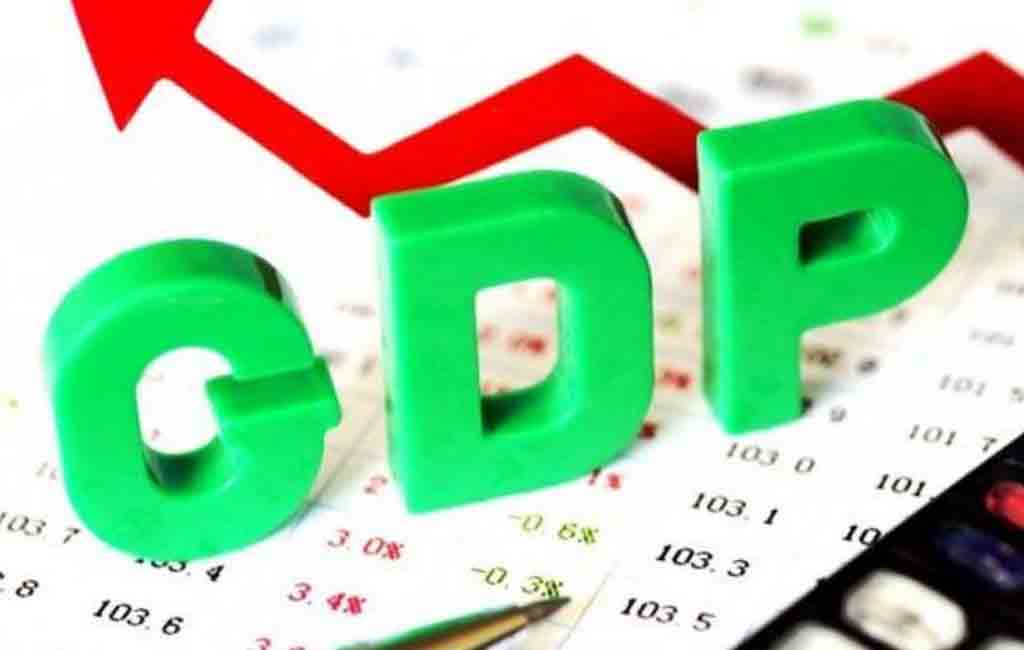
Gross Domestic Product (GDP) is one of the key indicators used to assess a country’s economic performance. It measures the total value of final goods and services produced within a country’s borders over a specific period, providing an overview of economic activity and changes in national output.
GDP data helps policymakers evaluate economic growth and formulate fiscal and monetary policies. Businesses and investors also use GDP trends to assess market conditions, anticipate changes in demand, and inform strategic planning. However, GDP should be interpreted alongside other economic indicators to develop a more comprehensive understanding of economic conditions.
Understanding how GDP is measured, calculated, and interpreted can help businesses evaluate economic developments and make more informed decisions about investment, expansion, and resource allocation.
Discover more : How Indonesia Is Responding to Trump’s Tariff Threats and Global Economic Uncertainty
What is Gross Domestic Product (GDP)?

Gross Domestic Product (GDP) is the total value of all final goods and sGross Domestic Product (GDP) measures the market value of all final goods and services produced within a country’s domestic territory during a specific period, typically a quarter or a year. It is widely used to evaluate the size of an economy and track changes in economic activity over time.
GDP can be measured using three approaches:
- Production Approach: Calculates the value added by industries and economic sectors, accounting for the value of output minus intermediate inputs.
- Income Approach: Measures the income generated through production, including compensation of employees, business profits, and other relevant forms of income.
- Expenditure Approach: Calculates total spending on final goods and services by adding household consumption, investment, government purchases, and net exports.
GDP is also commonly reported in nominal and real terms. Nominal GDP measures output using current market prices, so its value can change because of changes in both production and prices. Real GDP adjusts for price changes to provide a clearer measure of changes in the volume of goods and services produced.
Real GDP is therefore generally more appropriate for evaluating economic growth over time, while nominal GDP remains useful for understanding the current monetary value of economic output.
Explore other key macroeconomic indicators that help assess economic conditions.
How to Calculate GDP and Its Interpretation

Before discussing further how to calculate and interpret GDP figures, it is important to first understand the main components that make up this indicator.
By knowing its components, we can more easily assess how each sector in the economy contributes to the total national output value.
Components of GDP
GDP measured using the expenditure approach consists of four main components: household consumption, investment, government spending, and net exports.
Household Consumption (C)
Household consumption includes spending on final goods and services, such as food, clothing, transportation, and healthcare. Changes in household consumption can provide insight into consumer demand and spending patterns.
Investment (I)
Investment refers to spending on capital goods, such as machinery, equipment, and buildings, that support future production. Changes in business investment and inventories can indicate shifts in business confidence and expected demand.
Government Spending (G)
Government spending includes expenditure on goods and services, such as infrastructure projects, public facilities, and government services. Transfer payments, such as social benefits, are excluded from this component because they do not directly represent purchases of goods or services.
Net Exports (X − M)
Net exports represent the value of exports minus imports of goods and services. A positive balance means exports exceed imports, while a negative balance means imports exceed exports. Imports are subtracted in the GDP formula to exclude foreign-produced goods and services from domestic output.
GDP Calculation Formula

The expenditure approach calculates GDP by adding spending on final goods and services produced within a country’s borders. Its formula is:
GDP = C + I + G + (X − M)
Where:
- C = Household consumption
- I = Investment
- G = Government spending on goods and services
- X = Exports of goods and services
- M = Imports of goods and services
For example, assume a country records the following annual figures:
- Household consumption: Rp 5,000 trillion
- Investment: Rp 2,000 trillion
- Government spending: Rp 1,500 trillion
- Exports: Rp 1,000 trillion
- Imports: Rp 800 trillion
GDP is calculated as follows:
GDP = 5,000 + 2,000 + 1,500 + (1,000 − 800)
GDP = Rp 8,700 trillion
This example illustrates how the expenditure approach combines the main spending components to estimate domestic economic output. To assess economic growth, GDP figures should be compared across periods using real GDP, which adjusts for price changes.

Here is a visualization of each component’s contribution to GDP using a horizontal bar chart. This graphic clarifies that imports (M) reduce total GDP value, while other components such as consumption and investment contribute positively.
Discover More : Risk Management Strategies for Small and Medium Enterprises
The Impact of GDP on Business Decisions

GDP trends provide businesses with useful information about overall economic activity, market demand, and potential investment opportunities. However, GDP should be evaluated alongside industry-specific data, inflation, interest rates, and consumer confidence before making strategic decisions.
Business Expansion and Investment
Sustained economic growth may indicate stronger demand and create opportunities for businesses to expand production, enter new markets, or invest in additional capacity. Companies should still assess whether growth is occurring in their target industries and customer segments.
Budgeting and Financial Planning
GDP growth and contraction can influence revenue expectations, operating costs, and financing needs. Businesses can use economic forecasts to develop alternative budgets and prepare for different market conditions.
Risk Management
Slower economic growth may signal weaker demand or increased uncertainty. Businesses can respond by reviewing cash flow, controlling discretionary expenditure, diversifying revenue sources, and assessing potential financial risks.
Market and Resource Allocation
GDP trends, when combined with sector-level data, can help companies identify promising markets and prioritize resources. Decisions should account for regional differences, competitive conditions, and the specific needs of target customers.
By integrating GDP analysis with company-level financial and market information, businesses can make more informed decisions about investment, resource allocation, and long-term planning.
Conclusion
Gross Domestic Product (GDP) is a key indicator of economic performance because it measures the value of final goods and services produced within a country over a specific period. Understanding its components, calculation methods, and limitations helps businesses interpret economic trends more accurately.
For business decision-makers, GDP data can support market assessments, financial planning, investment evaluation, and risk management. However, it should be analyzed alongside other indicators to account for industry-specific conditions and broader economic developments.