

Many companies develop their business plans based on the assumption that market conditions will move relatively in line with projections. Growth targets, budgets, and investment decisions are often developed using historical data that is considered sufficiently representative of the future.
The problem is that business realities rarely move that smoothly. Inflation, rising interest rates, supply chain disruptions, regulatory changes, and geopolitical uncertainty can alter market conditions within a short period. When initial assumptions are no longer relevant, organizations that rely on a single scenario often need more time to adapt.
This is where scenario planning becomes important. Rather than attempting to predict the single most likely future, this approach helps companies prepare for multiple possibilities at the same time, allowing strategic decisions to be made more quickly and in a more measured manner when business conditions change.
Why Is Scenario Planning Important Amid Business Uncertainty?

One of the biggest challenges for management is distinguishing between risks that can be predicted and uncertainties that are difficult to quantify. Many business decisions are still made based on the assumption that past patterns will repeat themselves in the future.
This approach can be effective when business conditions are relatively stable. However, when major changes occur, such as an economic crisis or a sudden increase in operating costs, companies may struggle because their existing strategies are no longer aligned with actual conditions.
3This is where scenario planning plays a role. The approach helps address these limitations. Instead of relying on a single projection, organizations can prepare for multiple possibilities based on factors that have a significant impact on the business.
Changes in Macroeconomic Conditions That Are Difficult to Predict
One of the main reasons why scenario planning is becoming increasingly important is the growing volatility of macroeconomic factors.
Changes in inflation, interest rates, exchange rates, and global economic conditions can directly affect various aspects of a business. Companies that rely on imported raw materials, for example, may experience cost pressures when exchange rates fluctuate.
The same applies to companies that depend heavily on consumer purchasing power. When inflation rises, customers may begin changing their consumption patterns, which can affect demand for certain products or services.
Under these conditions, companies need a business inflation mitigation approach that does not focus solely on cost reduction, but also considers how economic changes can affect the overall business strategy.
Scenario planning also helps organizations identify these potential impacts at an earlier stage. By understanding different economic scenarios, companies can prepare more flexible strategies, such as adjusting their cost structure, evaluating their product portfolio, or changing investment priorities.
The Limitations of Business Planning Based on a Single Assumption
A common mistake in business planning is assuming that the future can be projected based solely on a single condition considered most likely to occur.
For example, a company may set growth targets based on the assumption that demand will increase steadily over the next several years. However, when economic conditions change, the strategy may become difficult to execute because there is no alternative plan in place.
The problem is not necessarily that the company has poor planning. In fact, many organizations have highly detailed strategies. The challenge is that these strategies depend too heavily on a single key assumption.
In an environment characterized by constant change, flexibility becomes an important factor. Companies need the ability to adjust their direction when conditions change without having to rebuild their strategy from the ground up.
Therefore, scenario planning is not intended to replace existing business planning. Instead, it serves as a complement that helps companies prepare for various possibilities that may arise.
Scenario Planning as Part of the Company’s Strategic Planning
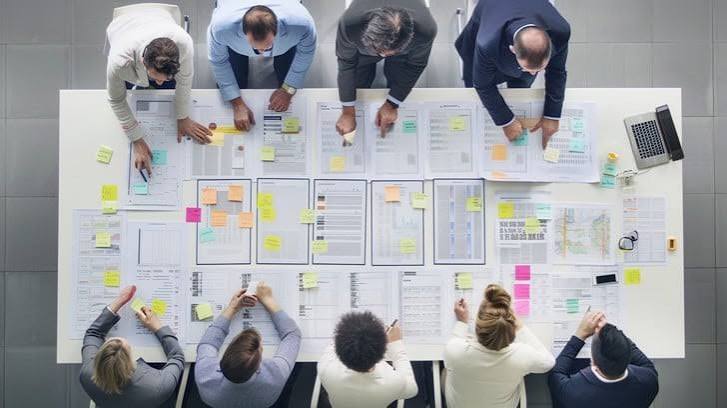
Many companies understand the importance of strategic planning, but still face difficulties when translating their strategies into different conditions that may occur in the future.
The problem is that strategies built around a single assumption can become less flexible when the business environment changes. A company may have clear objectives but lack a clear understanding of what actions should be taken if market conditions move in a different direction.
This is where scenario planning plays an important role. The approach helps companies connect long-term strategies with various potential external changes that may affect the business.
Scenario planning does not mean making a definitive prediction about the future. Its primary focus is to help management understand different possibilities, test the resilience of existing strategies, and prepare faster responses when changes occur.
The Difference Between Scenario Planning and Forecasting

Forecasting and scenario planning are often considered similar because both are used to help companies understand future conditions. However, they have different objectives and approaches. The following are some of their key differences.
1. Analysis Focus
Forecasting seeks to estimate the most likely conditions based on historical data, market trends, and established patterns. Meanwhile, scenario planning focuses on multiple possibilities that may occur, including conditions that the company has never experienced before.
2. Basis for Decision-Making
Forecasting is generally used as a basis for setting operational targets, such as sales projections, production requirements, or annual budgets. In contrast, scenario planning helps management develop strategies that enable the company to remain prepared for various changes that may occur in the future.
3. How Uncertainty Is Viewed
Forecasting tends to assume that the future will continue to follow patterns that can be reasonably predicted. On the other hand, scenario planning is built on the assumption that certain factors are difficult to predict, such as inflation, regulatory changes, supply chain disruptions, or shifts in consumer behavior.
4. Situations Where Each Approach Is Most Appropriate
Forecasting is highly effective when business conditions are relatively stable and the company primarily needs projections based on existing trends. However, when the business environment is characterized by uncertainty and changes occur rapidly, scenario planning becomes more relevant because it helps organizations prepare alternative strategies before risks actually materialize.
Key Benefits of Scenario Planning
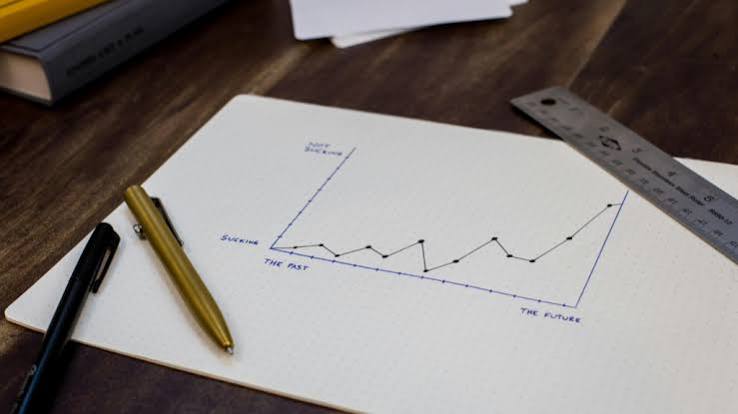
Scenario planning not only helps companies navigate uncertainty but also improves the quality of strategic decision-making. Some of its key benefits include the following.
1. Helping Assess Potential Impacts Before Making Decisions
Scenario planning enables management to evaluate different potential outcomes before implementing a strategic decision. For example, when a company plans to expand into a new market, management can assess how the decision may affect the business if market growth is slower than expected, operating costs increase, or competitors respond aggressively.
2. Improving the Quality of Decision-Making
Through the scenarios that have been developed, companies can identify not only potential opportunities but also risks that may emerge. This approach enables more informed strategic decisions because they are based on multiple possibilities rather than a single assumption about future conditions.
3. Accelerating the Response to Change
When market conditions change, companies do not need to restart the analysis process from the beginning. Alternative strategies have already been prepared, allowing management to make decisions more quickly and reduce the impact of changes as they occur.
4. Strengthening Long-Term Business Resilience
By considering various possibilities from the outset, companies become better prepared to face economic uncertainty, regulatory changes, and market dynamics. This helps organizations build more adaptive strategies while maintaining business continuity over the long term.
How to Develop Effective Business Scenario Planning

Developing scenario planning requires a systematic process. Companies cannot simply create a list of risks; they need to understand which factors could have the greatest impact on business continuity.
The primary objective of this process is to build organizational readiness for various changes that may occur.
1. Identifying Key Uncertainty Factors
The first step in developing scenario planning is identifying external factors that have a high level of uncertainty and could significantly impact the business.
Factors that companies need to consider include changes in economic conditions, inflation rates, government regulations, technological developments, changes in customer behavior, and competitor dynamics. However, not all of these factors need to be incorporated into the scenarios. Companies need to determine which factors have the greatest influence on their business continuity.
For example, a manufacturing company may need to pay greater attention to changes in raw material prices and exchange rates than to market trends that have little impact on its operations.
2. Determining Relevant Business Scenarios
Once the key factors have been identified, companies can begin developing several possible scenarios.
Organizations generally use three main categories:
- Optimistic scenario, where external factors develop more favorably than expected.
- Moderate scenario, where the business performs in line with its key assumptions.
- Pessimistic scenario, where the company faces greater pressure than expected.
However, the quality of scenario planning is not determined by the number of scenarios created. What matters more is whether each scenario has a clear connection to actual business conditions.
Scenarios that are too simple may leave companies unprepared for changes. Conversely, creating too many scenarios can cause organizations to lose focus when determining priorities.
3. Analyzing the Impact of Each Scenario
Once the scenarios have been developed, companies need to understand how each condition could affect the business.
The analysis may cover various aspects, including:
- impact on revenue
- changes in cost structure
- working capital requirements
- operational risks
- the company’s ability to retain customers
This stage also helps management identify which areas are most vulnerable when conditions change. For example, under a high-inflation scenario, a company can assess whether increased costs can still be absorbed by its current margins or whether changes to its pricing strategy are required.
4. Developing the Company’s Response Strategy
The final step is determining the actions that need to be taken under each scenario.
Companies need to have a clear understanding of:
- which decisions need to be made immediately
- which indicators signal a change in conditions
- who is responsible for making the decisions
With these strategies in place, companies do not have to wait for problems to escalate before taking action.
The Role of Macroeconomic Risk Management in Scenario Planning
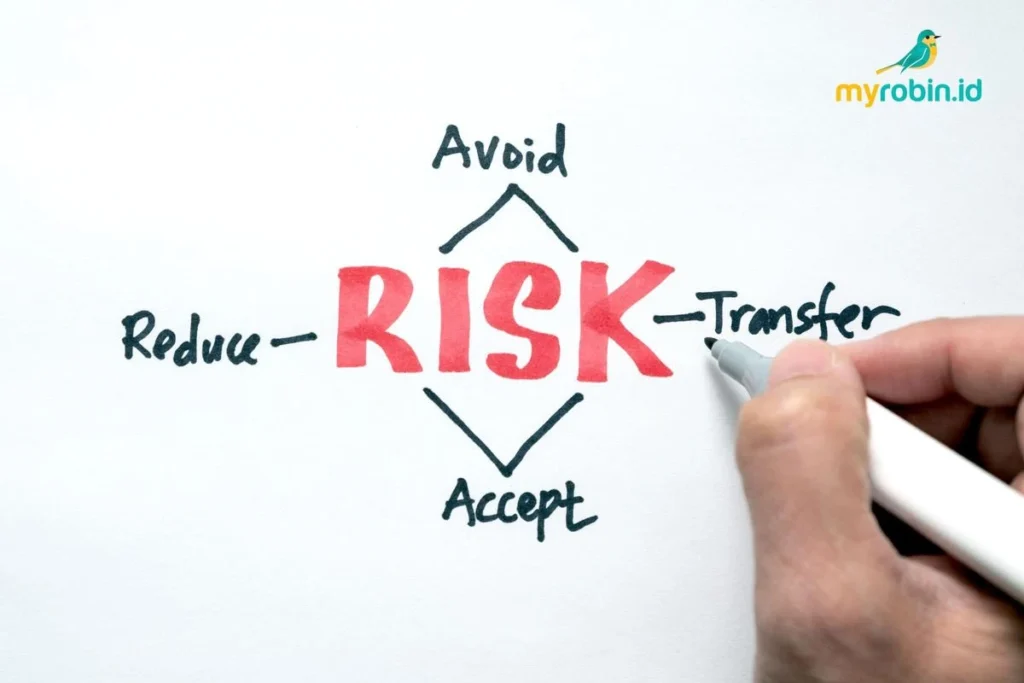
Changes in the global economy mean that companies can no longer assess risk solely from an internal perspective. External factors such as inflation, interest rates, government policies, and global market conditions can have a significant impact on business continuity.
Therefore, macroeconomic risk management is an important part of the scenario planning process.
Through this approach, companies can understand how changes in the economic environment may affect strategic decisions.
For example, rising inflation does not only affect production costs. Companies also need to consider its impact on customer purchasing power, pricing strategies, and investment plans.
Companies that are able to integrate macroeconomic risk management into their strategic planning will have greater adaptability than organizations that only react after changes have already occurred.
Indicators of Successful Scenario Planning

The effectiveness of scenario planning cannot be measured solely by the number of scenarios successfully developed. Companies need to assess whether the approach actually helps improve the quality of decision-making.
1. The Company’s Speed in Responding to Change
One indicator of successful scenario planning is an organization’s ability to respond to changes more quickly.
When economic or market indicators begin to show changes, companies with scenario preparations can take action immediately because they already understand the potential impact.
2. The Quality of Strategic Decision-Making
Scenario planning can also be assessed based on how management makes decisions.
When strategies are developed by considering various risks and opportunities, the decision-making process becomes more structured than one that relies solely on intuition or existing assumptions.
Ultimately, scenario planning is not intended to eliminate uncertainty. No company can control every external change.
However, companies can improve their readiness by understanding different possibilities and developing more flexible strategies.
Conclusion
In an increasingly dynamic business environment, companies need more than just a growth plan. Organizations also need the ability to navigate various conditions that may arise in the future.
By applying the right approach to business scenario planning, companies can strengthen strategic planning, improve their ability to navigate market uncertainty, and build strategies that are more adaptive to economic changes.
Scenario planning helps companies shift from a reactive mindset toward a more proactive approach. By understanding different possibilities before they occur, organizations have a greater opportunity to maintain stability while identifying new opportunities amid change.
Arghajata Consulting helps companies build more adaptive business strategies through scenario planning, macroeconomic risk analysis, organizational resilience assessment, and the development of strategic planning aligned with business objectives.
Discuss your company’s strategic needs with Arghajata Consulting to build an organization that is better prepared for uncertainty and capable of sustaining long-term business growth.