

Suku bunga memiliki peran penting dalam menjaga stabilitas perekonomian dan mempengaruhi berbagai keputusan keuangan, baik bagi masyarakat maupun perusahaan. Perubahannya dapat berdampak pada biaya pinjaman, daya beli, hingga aktivitas investasi. Lantas, mengapa suku bunga bisa naik dan bagaimana dampaknya terhadap perekonomian?
Apa Itu Suku Bunga dan Bagaimana Cara Kerjanya?

Suku bunga merupakan sebuah biaya yang harus dibayarkan peminjam kepada pemberi pinjaman sebagai suatu imbalan atas penggunaan uang dalam jangka waktu tertentu.
Bagi pihak yang menyimpan uang di bank, suku bunga juga menjadi imbal hasil yang diterima dari simpanan tersebut. Sementara untuk besarannya biasanya dinyatakan dalam persentase per tahun.
Dalam perekonomian, suku bunga memiliki peran penting karena dapat mempengaruhi keputusan masyarakat dan perusahaan dalam mengelola keuangan.
“Ketika suku bunga pinjaman meningkat, biaya untuk memperoleh dana relatif menjadi lebih mahal.”
Sebaliknya, suku bunga yang lebih rendah dapat mendorong masyarakat dan perusahaan untuk mengambil kredit, melakukan investasi, atau meningkatkan konsumsi.
Di Indonesia, salah satu instrumen yang menjadi acuan dalam kebijakan moneter adalah BI-Rate, yaitu suku bunga kebijakan yang ditetapkan oleh Bank Indonesia. BI-Rate digunakan sebagai sinyal arah kebijakan moneter untuk memengaruhi suku bunga di pasar uang dan perbankan, termasuk suku bunga deposito serta kredit.
Perubahan pada BI-Rate tidak selalu langsung diikuti oleh perubahan suku bunga perbankan dalam besaran dan waktu yang sama. Bank juga membutuhkan waktu untuk menyesuaikan kebijakannya, dengan mempertimbangkan kondisi likuiditas, risiko, dan situasi perekonomian.
Oleh karena itu, dampak perubahan suku bunga acuan dapat dirasakan secara bertahap oleh masyarakat dan dunia usaha.
Discover More : Hypothesis-Driven Problem Solving: How Consultants Quickly Break Down Complex Problems
Why Do Interest Rates Rise?
Interest rate increases are generally part of monetary policy measures taken by central banks to maintain economic stability. These decisions are not made arbitrarily but are based on various considerations, including inflation, exchange rates, and domestic and global economic developments.
Several factors can drive interest rate increases, including:
Controlling inflation
When the prices of goods and services rise too rapidly, central banks may increase interest rates to reduce demand-side pressures. Higher borrowing costs are expected to encourage more cautious spending and investment, helping ease upward pressure on prices.
Maintaining exchange rate stability
Currency depreciation can increase import costs and contribute to inflation, particularly in countries that rely heavily on imported goods and raw materials. Higher interest rates can help make domestic financial assets more attractive to investors and support exchange rate stability.
Responding to global economic conditions
Interest rate changes in other countries, financial market uncertainty, and geopolitical tensions can affect capital flows and exchange rates. Central banks need to consider these developments when determining the direction of their interest rate policies.
Managing excessive demand growth
When economic growth is too rapid and demand increases beyond the economy’s production capacity, inflationary pressures may emerge. Under certain conditions, central banks can use interest rate increases to ensure that economic activity remains sustainable.
Therefore, rising interest rates do not necessarily indicate that the economy is deteriorating. Such measures can serve as preventive steps to manage risks and maintain economic stability over the medium and long term.
However, their effectiveness still depends on prevailing economic conditions and how individuals and businesses respond to changes in borrowing costs.
What Are the Effects of Rising Interest Rates on the Economy?
Rising interest rates can affect various economic activities, from how individuals manage their money to how businesses make operational and strategic decisions.
When borrowing costs increase, individuals and businesses tend to become more cautious about their financial decisions.
These effects can be seen in consumption, investment, savings, and overall economic development. The following are some of the key effects of rising interest rates on the economy:
Effects on Household Consumption and Purchasing Power
Rising interest rates can put pressure on household consumption, particularly for borrowers with floating-rate loans.
When lending rates increase, loan installments may also rise, requiring borrowers to allocate a larger portion of their income to debt repayments.
This can reduce the amount of money available for other household expenses. In addition, consumers may postpone major purchases that require financing, such as homes and vehicles.
Higher borrowing costs can also reduce demand for new loans, potentially slowing consumer spending.
Effects on Credit and Investment
Rising interest rates can increase financing costs for businesses, particularly those that rely on bank loans to fund their operations or business development.
Higher borrowing costs can affect financing feasibility and reduce companies’ willingness to take on new debt.
Businesses may also reconsider their investment plans, especially projects that require substantial capital and have long payback periods.
When financing costs increase, companies tend to be more selective in setting investment priorities or may postpone expansion plans that are unlikely to generate sufficient returns.
These conditions can potentially slow investment activity and business sector growth.
Effects on Savings and Exchange Rates
Rising interest rates can make bank savings products, such as time deposits, more attractive because depositors may earn higher returns. This may encourage some individuals to save rather than spend or invest in higher-risk instruments.
From an exchange rate perspective, higher interest rates can also increase the appeal of domestic financial assets to investors.
When supported by favorable economic conditions and strong market confidence, capital inflows can help support the domestic currency.
However, exchange rate movements are not determined by interest rates alone. They are also influenced by global conditions, investment risks, and market expectations.
Effects on Inflation and Economic Growth
One of the main objectives of raising interest rates is to control inflation. When borrowing costs increase, consumption and investment tend to slow, reducing demand-side pressure on goods and services.
If demand becomes more manageable, price increases are expected to moderate.
However, this policy can also affect economic growth. Lower consumption and investment may reduce production activity and business expansion.
Therefore, central banks need to balance price stability with economic growth to prevent interest rate policies from causing excessive economic slowdowns.
What Happens When Interest Rates Fall?
Lowering interest rates is one of the monetary policy measures central banks can take to stimulate economic activity.
When the benchmark interest rate is reduced, borrowing costs may decrease, giving individuals and businesses greater opportunities to access financing.
For individuals, lower interest rates can make loan installments more affordable, particularly for floating-rate loans. Lower borrowing costs may also encourage consumers to take out loans for major purchases, such as homes and vehicles.
As a result, consumer spending may increase. For businesses, lower financing costs can create opportunities to increase investment and expand operations.
Companies may reconsider expansion plans, equipment purchases, or production capacity improvements that were previously postponed due to high borrowing costs.
Lower interest rates can also influence how individuals manage their savings. When deposit returns decline, some people may begin considering alternative investment instruments that offer higher potential returns.
However, such decisions still depend on each individual’s risk profile and financial objectives.
Although lower interest rates can stimulate consumption and investment, they also carry certain risks. If demand increases too rapidly, inflationary pressures may return.
In addition, a significant reduction in domestic interest rates relative to those of other countries may affect capital flows and exchange rate stability. For this reason, central banks need to assess overall economic conditions before making policy decisions.
How Have the BI-Rate and the Fed’s Interest Rates Evolved in 2026?
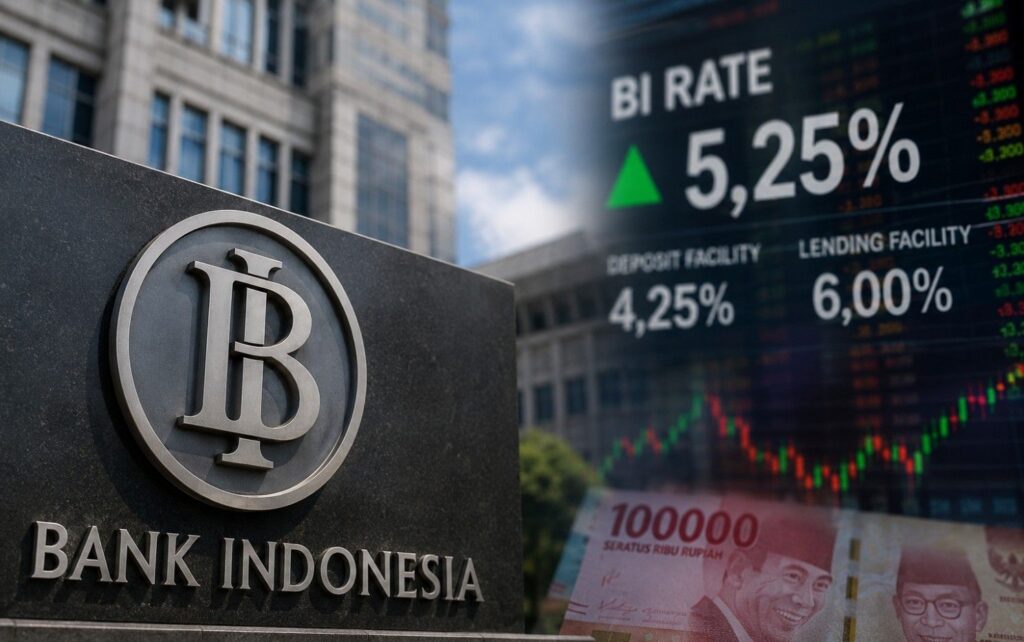
Throughout 2026, the interest rate policies of Bank Indonesia and the Federal Reserve (the Fed) have been important factors in understanding both global and domestic economic conditions.
In November 2026, Bank Indonesia raised the BI-Rate by 25 basis points to 6.00% to maintain rupiah exchange rate stability amid global economic uncertainty.
Meanwhile, the Fed maintained its benchmark interest rate at 3.75%–4.00% in its October 2026 decision. These different policy directions show how each central bank adjusts its interest rate decisions based on its country’s economic conditions and challenges.
Domestically, BI-Rate policy needs to be considered alongside other economic indicators. Indonesia’s inflation rate stood at 3.23% in October 2026. Meanwhile, the Open Unemployment Rate (Tingkat Pengangguran Terbuka or TPT) declined to 4.75% in August 2026, compared with 4.85% in the same period a year earlier.
The decline in the unemployment rate indicates an improvement in one aspect of the labor market, although it does not fully capture overall employment conditions. This indicator should be considered alongside economic growth and business activity to provide a more comprehensive picture of Indonesia’s economic situation.
For individuals and businesses, changes in interest rate policies have implications for borrowing costs, savings returns, and exchange rate movements. An increase in the BI-Rate, for example, can affect banks’ funding costs and eventually influence lending rates.
Meanwhile, exchange rate fluctuations require attention from businesses with foreign currency obligations or transactions, as they can increase import costs and repayments on foreign currency debt.
Understanding monetary policy developments and broader economic indicators is therefore important for anticipating changes in financing costs and adjusting business strategies.
Discover More : AI Adoption Strategy for Companies: Steps to Build a Structured Digital Transformation
How Can Businesses Manage Changes in Interest Rates?

Interest rate changes can affect a company’s financing costs, cash flow, and investment decisions. When interest rates rise, businesses with floating-rate loans may face higher interest expenses.
Conversely, when interest rates fall, companies may have opportunities to secure financing at lower costs. To navigate these conditions, businesses need to manage their finances through careful planning.
This includes reviewing existing debt obligations, adjusting investment plans, and managing cash flow to ensure that business operations continue to run smoothly.
Reviewing Debt and Financing Costs
Businesses need to evaluate all existing loan obligations, including outstanding debt, interest rates, repayment periods, and maturity schedules. This assessment helps management understand how interest rate changes may affect the company’s financial burden.
One important consideration is the difference between fixed-rate and floating-rate loans. Fixed-rate loans provide certainty regarding interest payments throughout the agreed period. Floating-rate loans, on the other hand, can change in line with a particular benchmark rate, meaning borrowing costs may increase when interest rates rise.
Based on this assessment, businesses can consider several measures, such as renegotiating loan terms with lenders, evaluating refinancing options, or adjusting their debt structure. The objective is to ensure that repayment obligations remain aligned with the company’s financial capacity.
Adjusting Investment and Expansion Plans
Interest rate changes should also be considered when determining investment and business expansion plans. When borrowing costs increase, companies need to reassess the feasibility of projects that require substantial external financing.
Management can prioritize investments with clearer return prospects and stronger relevance to business needs. Meanwhile, projects involving significant costs and higher risks can be reviewed in terms of their implementation timeline and financing sources.
However, rising interest rates do not mean that all investment plans should be put on hold. Businesses still need to consider long-term profit potential, operational requirements, and market opportunities.
Investment decisions should be based on feasibility assessments and financing capacity rather than being driven solely by short-term interest rate movements.
Managing Cash Flow and Financial Risks
Cash flow management becomes increasingly important when interest rates fluctuate. Businesses need to ensure that cash inflows and outflows are properly managed so that operational expenses, debt repayments, and working capital requirements can be met.
One practical measure is to prepare regular cash flow projections that account for different possible interest rate scenarios. Businesses can also conduct scenario analysis to estimate how changes in interest rates may affect borrowing costs, revenue, and their ability to meet financial obligations.
In addition, companies should maintain adequate cash reserves and manage working capital efficiently. Sufficient liquidity can reduce dependence on short-term borrowing when financing costs increase.
Through effective debt management, investment planning, and cash flow control, businesses can become better prepared to navigate interest rate changes. These strategies help maintain financial stability while ensuring that companies retain the flexibility to pursue their growth plans.
Conclusion
Interest rates are an important economic instrument because they influence the financial decisions of individuals and businesses, as well as overall economic activity.
Interest rate increases are generally implemented to control inflation and maintain economic stability, although they can also raise borrowing costs and affect consumption and investment. Conversely, lower interest rates may stimulate economic activity by reducing financing costs.
For businesses, interest rate movements should be considered when developing financial and business strategies. Reviewing debt obligations, investment plans, and cash flow management can help companies anticipate changes in financing costs and maintain operational stability.
By understanding economic conditions and the direction of monetary policy, businesses can make more informed decisions and prepare for different economic scenarios.
Changes in interest rates and broader economic conditions require adaptable business strategies supported by sound financial planning.
Arghajata Consulting helps businesses evaluate their operations, identify risks, and develop strategies aligned with their organizational objectives.