

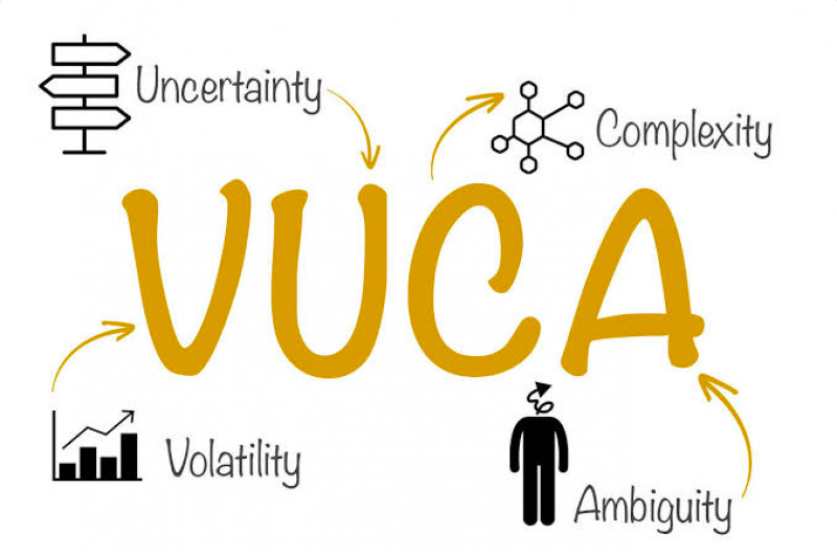
VUCA is an acronym for Volatility, Uncertainty, Complexity, and Ambiguity. As the words suggest, VUCA describes a world that is dynamic, unpredictable, deeply interconnected, and often confusing—where even long-term plans designed at the start of the year may become irrelevant within months or even weeks.
In this context, organizations are often required to respond with strategic agility. This means having the ability to detect early signals of change, navigate ambiguity without losing direction, and balance long-term resilience with short-term execution speed.
To gain a deeper understanding of what VUCA is, here is a complete overview you can explore.
Discover More : A Practical Guide to Cultivating a Visionary Character in Leadership
What Is VUCA?

VUCA is an acronym for four key concepts:
- Volatility: Rapid and unstable changes.
- Uncertainty: A lack of predictability about the future, meaning many unexpected variables.
- Complexity: The presence of numerous interconnected factors that are difficult to map.
- Ambiguity: Confusing situations caused by multiple meanings or a lack of clarity.
The term VUCA originally emerged from leadership theory developed in training at the United States Army War College. It was first explained by Warren Bennis and Burt Nanus in 1987.
Since then, it has been widely adopted in the business and organizational world as a framework for understanding a global reality that feels increasingly dynamic.
The Impact of VUCA on Organizations
Organizations operating in a VUCA environment face significant challenges—from sudden market shifts and technological disruptions to changes in customer behavior. All of these can occur in the blink of an eye and have major consequences.
VUCA forces organizations to abandon rigid managerial approaches, which are seen as inflexible, and instead develop faster, more accurate decision-making systems, while cultivating cultural and structural authenticity in response to external shocks.
Without readiness to face VUCA, organizations risk losing relevance before they even have the chance to evolve.
Discover More : 3 Indicators to Measure Corporate Financial Health
Common Challenges in Decision-Making

One of the clearest impacts of VUCA is the pressure it places on decision-making. Many unprepared leaders feel stuck—torn between acting quickly and lacking sufficient data or clarity.
Some typical challenges include:
1. Information that changes rapidly but may not be accurate.
2. Dilemmas between short-term decisions and long-term vision, both of which carry risks and benefits.
3. A tendency to play it safe instead of experimenting, due to fear of taking risks.
This is where the presence of leaders who can think systemically, recognize patterns amid chaos, take risks, and remain comfortable with ambiguity becomes essential.
Strategies to Navigate the VUCA Era
To respond effectively to the realities of VUCA, leaders cannot rely on reactive approaches. Instead, more comprehensive strategies needed—built on three core foundations:
1. Clear Vision
In an uncertain world, vision serves as the primary anchor. A strong and clear vision—updated contextually—can provide direction, meaning, and consistency amid rapid change.
This not just about having long-term goals, but about how that vision is communicated and explained concretely and understandably, so team stays aligned and focused. Leaders must also ensure the vision is not a static statement, but a guiding reference in daily decision-making.
2. Collaborative and Collective Leadership
Today, leaders no longer expected to have all the answers, but to act as facilitators and connectors of diverse voices. Cross-functional and cross-level collaboration is key to effective leadership.
Collective leadership means creating space for diverse voices to emerge and encouraging active engagement across all levels of the organization. By building collaborative structures, leaders not only accelerate adaptation but also strengthen ownership of a shared direction.
3. Decisions Based on Data and Intuition
Data is essential in modern decision-making, but in ambiguous and unpredictable environments, not all decisions can be based solely on data.
This is where strategic intuition comes into play. Leaders need to combine data-driven insights with experiential understanding, field context, and sensitivity to patterns that may not yet appear on dashboards.
Facing VUCA is not about controlling chaos—it’s about navigating it consciously and deliberately. Leaders who understand this dynamic will be more prepared not just to survive, but to reshape organizations to be relevant, adaptive, and courageous in looking ahead.
At Arghajata Consulting, we assist organizations in developing leadership strategies that are more agile, collaborative, and contextual. Contact us to discuss how we can support your organization’s transformation in this era of uncertainty.