This article is the direct opinion Rezki Sri Wibowo of as our Managing Director. This article has been carefully reviewed to provide accurateness and reliable information, ensuring high standards of quality, credibility, and trustworthiness.
For a country like Indonesia, international trade should not be viewed merely as a set of statistical figures. One can keep checking reports from the Central Statistics Agency (BPS), this month may show a surplus, the next month a deficit, and so on. Price fluctuations driven by global dynamics, whether political or economic, heavily influence those numbers.
Of course, trade statistics carry their own importance. They provide signals about the broader economic landscape and help maintain vigilance. For instance, the growth of the trade sector has been relatively sluggish. In 2023, it grew by only around 4.85 percent compared to the previous year, still below the national economic growth rate of 5.05 percent.
Yet trade cannot be underestimated. Its contribution to the national economy reached 12.94 percent, the second largest after the manufacturing sector. This line of business also employs around 19 million workers.
Domestic trade performance, transactions of goods and services tends to be stable but grows slowly. Can exports be pushed further? Absolutely. Indonesia holds enormous potential. Its wealth in mining, plantations, and even spices offers tremendous opportunities to generate added value through downstreaming. This is a matter of innovation, and of course, political will.
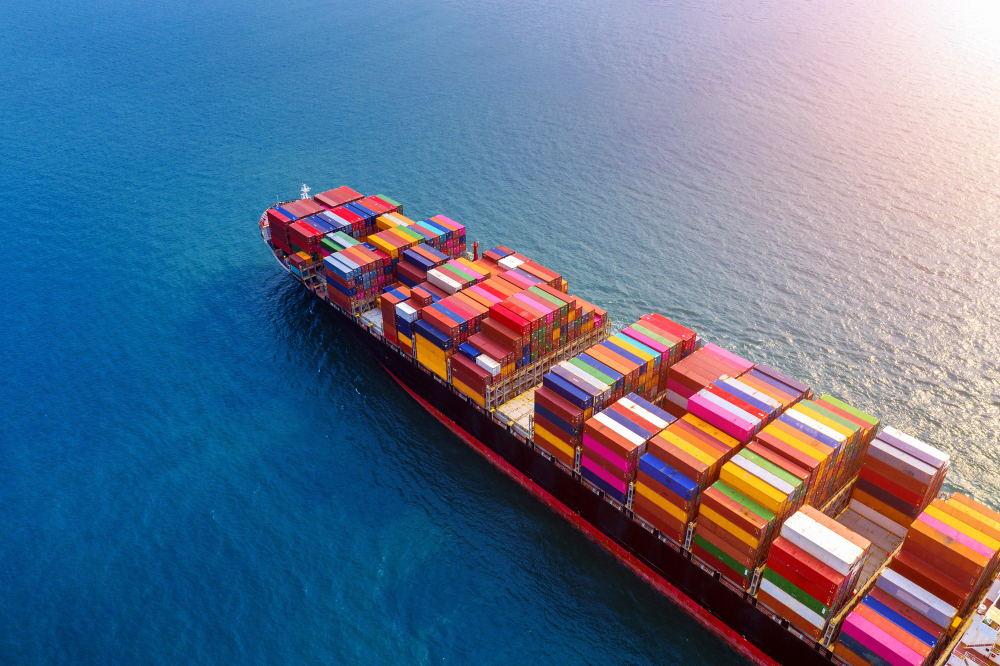
Moreover, 90 percent of international goods trade is conducted by sea, and according to the Ministry of Transportation, 40 percent of that traffic passes through Indonesian waters. Four strategic maritime chokepoints, Malacca, Sunda, Lombok, and Makassar Straits, support Indonesia’s logistics advantage and even position it to aspire as a global trading hub.
History must not be forgotten. Indonesia was colonized for over 350 years because of trade. The town of Barus in North Sumatra bears evidence of centuries-old trade between the archipelago and the Middle East. The high value of spices even led to the exchange of Manhattan, now the world’s most expensive district for Run Island in Banda between the Dutch and the English. Colonialism itself was triggered by the lust for trade.
This is why international trade is not always about making the world better. It can also become one of the most controversial political issues, from colonialism to domestic political disputes.
A Need for Repositioning Diplomacy and Strategy
Economically, Indonesia has the potential to reap two simultaneous benefits: absolute advantage and comparative advantage. Many goods can be produced here because of abundant raw materials, which other countries cannot replicate. Take palm oil as an example, produced from local plantations, it provides Indonesia with absolute advantage.
Comparative advantage also offers opportunities, provided it is taken seriously. When supply chains between raw materials, processing, and distribution are more efficient than those of competitors, production costs become lower. Once again, this boils down to strategy and political will.
Indonesia’s strength in trade should not be celebrated merely by juggling statistics of surplus and deficit. That strength is a vital asset to support diplomacy and vice versa.
Brand McDonald, an IMF official, once reminded in an article on the Fund’s website that every country, at its core, seeks to protect its own interests by erecting barriers against others. In trade in services, this includes shipping traffic; in finance, access and regulations; and in goods, tariffs and restrictions.
It is indeed difficult to separate trade from politics. Indonesia recently felt the sting when its flagship commodity, crude palm oil (CPO), was banned from entering the European Union on the grounds of deforestation.
McDonald’s note was not specifically about the EU’s policy on CPO, but it underlined once again: restrictive trade practices remain widespread. And so, trade inevitably requires strong inter-state diplomacy, while at the same time trade itself becomes a powerful instrument of diplomacy.
This is why trade strategy and geopolitics are essential for Indonesia’s government to maintain and expand its influence on the global stage. Ultimately, the goal is to deliver greater social welfare at home.
Like it or not, today’s geopolitical conflicts are largely centered around international trade. At the end of the day, it’s about economics, securing exports and markets, while ensuring access to strategic raw materials that underpin domestic industries.
These geopolitical shocks have also fueled a new phenomenon: the trend toward deglobalization. Countries are seeking to protect themselves with new restrictions and barriers. For Indonesia, however, a wide range of trade agreements already in place signals new opportunities to build trade ecosystems with multiple partners.
These opportunities range from cooperation in resource utilization to positioning Indonesia as an essential global supplier of raw materials. No nation can stand alone in preserving or enhancing its people’s welfare and Indonesia is no exception.
Still, strategy and diplomacy remain the keys to ensuring that trade pushes Indonesia closer to becoming an advanced and respected nation. They are also essential to fulfilling the mission of fostering global order, as envisioned by the nation’s founders. And there is reason to believe: trade has long been a proud heritage of Indonesia’s ancestors.